A school furniture order has one point of no return: the deposit. Before it, almost everything can still be changed with an email. After it, changes mean re-cutting tube, re-setting jigs and re-booking a container.
This is the list we would use if we were buying instead of selling. Twelve items, in the order they usually bite.
1. The standard — and which part of it
"EN 1729 compliant" is not a complete sentence. Part 1 covers dimensions; Part 2 covers safety, strength and durability. A supplier can meet Part 1 and still ship a frame that will not survive a decade of classroom use.
Write the exact part into the purchase order, and ask for the test report that covers the model you are buying. For a European tender, that usually means EN 1729-1 and EN 1729-2. For other markets, name the local standard and its version.
2. The board, named
"18 mm board" says nothing. MDF, particleboard and plywood behave differently at a cut edge, under a spilled cup and around a screw. Specify the board type, thickness and edge treatment — glued PVC band or moulded rim — rather than the thickness alone.
If the quote does not name the board, ask for a sample of the cut edge. It is the cheapest test in the whole order.
3. The frame, measured
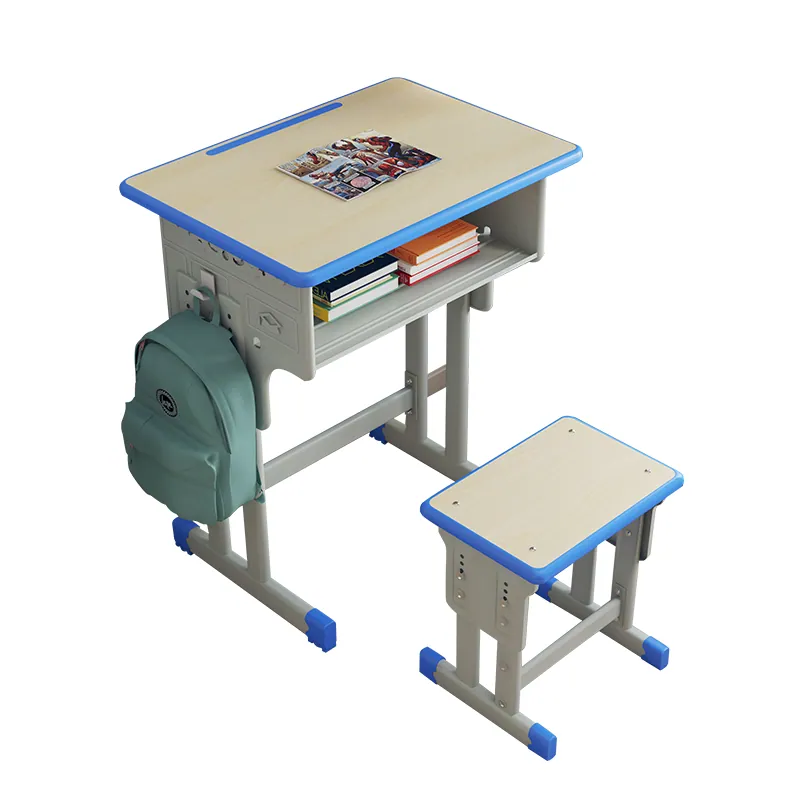
Tube size is only the beginning. Ask for wall thickness, the welding process, and the finish system. A 1.2 mm tube and a 1.5 mm tube can look identical in a photo and feel completely different after two years of stacked chairs.
For height-adjustable models, ask how the height is locked, how many positions exist, and whether the setting can move under load.
4. Hardware and spares
Screws, bolts, glides, caps and locking pins are where a good frame starts to feel cheap. Ask three questions:
- Are fixings plated or stainless, and what grade?
- Can the hardware be bought locally if something is lost?
- What spare percentage ships with the order, and at what price?
A carton of fifty spare glides costs very little. A school with three wobbly desks in month two costs a great deal of goodwill.
5. Colour, gloss and touch-up
Powder-coat colour is usually specified as RAL. Ask for the gloss level as well — the same RAL in matt and gloss reads as two different products. For multi-year projects, keep a physical sample of the approved colour, not just a code.
Also ask what touch-up paint ships with the order. Containers shift; a scuffed frame at installation is normal, and a matching touch-up pen turns a complaint into a five-minute fix.
6. MOQ per model and per colour
MOQ is rarely one number for the whole catalogue. It can be one number per model and a higher number per colour, because every colour change means cleaning the coating line.
Ask for the MOQ matrix before you build the room schedule. Five hundred sets spread across nine colours is a different production plan from five hundred sets in two colours.
7. Sample and approval
A sample is not a courtesy. It is the physical reference for the bulk order. Check it against the size mark, the board, the weld quality, the coating and the hardware — not just the shape.
Keep one unit sealed as the golden sample. If a dispute arrives in month six, that unit is the only argument that does not depend on memory.
8. Lead time, shipping window and deposit
Production time and shipping time are different numbers. Ask for both, and ask when the clock starts: after deposit, after artwork approval, or after the pre-production sample is signed.
Our standard ranges run about 25 days after deposit. Custom colours or new carton artwork add approval time before the line starts. Plan the vessel booking around the later number, not the earlier one.
9. Packing and carton marks
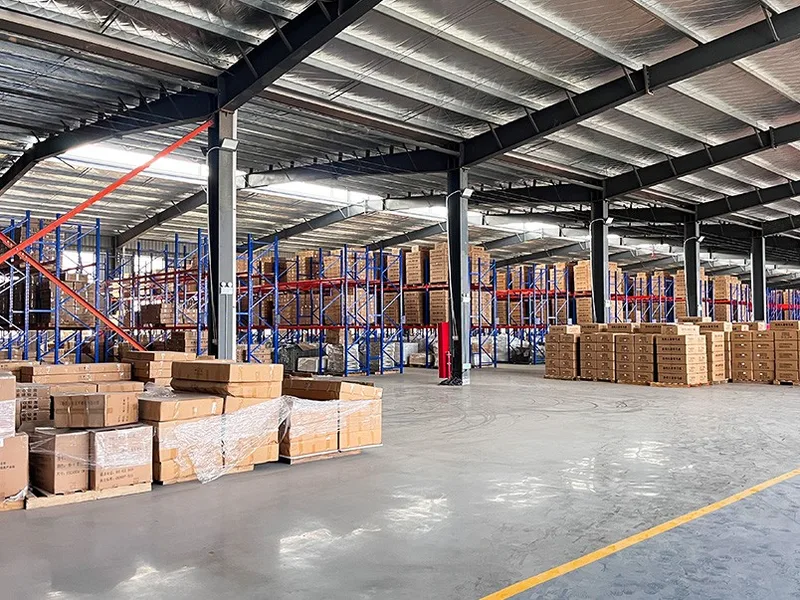
Export packing is part of the product. Ask for carton dimensions, gross weight, stacking limit and whether the cartons are palletised. Then ask what is printed on the carton: model, colour, size mark, quantity per carton and your shipping marks.
If the goods go straight to a school rather than a warehouse, carton marks decide whether the installer can find the right size for the right room without opening everything.
10. Inspection and loading photos
Agree the inspection point before production: what will be checked, on how many units, and who signs the report. At minimum, ask for dimensions, stability, hardware check and a photo set per model.
Then agree the loading photos you need: cartons in the container, seal number and a photo of the closed doors. Put the timing and required records in the order.
11. Documents
A complete shipment usually needs a commercial invoice, packing list, bill of lading, certificate of origin where applicable, and the test reports or certificate scans your tender requires. Confirm the list before the deposit, because some documents cannot be produced retroactively.
| Document | Why it matters | When to request |
|---|---|---|
| EN 1729 test report | Proves the model, not the catalogue | Before PO |
| ISO certificate scans | Supplier qualification | Before PO |
| Packing list | Customs and site distribution | Before shipment |
| Certificate of origin | Duty treatment | Before shipment |
| Loading photos | Proof of condition and quantity | Before departure |
12. Spares and after-sales
Ask what happens after the container lands. Who supplies a replacement shell in year two? What is the lead time for a single carton of spares? Is there an assembly drawing or video the school can use?
The best answer is not a promise of free replacement. It is a clear, priced path to spares and a document the school can actually read.
The short version
If you only have time for five questions, ask these: which board, which standard part, which coating system, what is the MOQ per colour, and what does the loading photo show. Those five decide most of the outcome.
Send us a room list or a model number and we will answer with a quotation that names the board, the frame, the finish, the MOQ and the lead time — not a price alone.